Anthropic and the 1.4 GW Energy Demand: Implications for AI Infrastructure
Anthropic, a key player in Artificial Intelligence development, has announced plans to secure 1.4 gigawatts (GW) of data center capacity in Australia by 2026. This strategic acquisition underscores the escalating demand for computational and energy resources required for training and operating advanced AI models, directly impacting global data infrastructure and energy markets.
By Carlos "Emérito" López Lovera•6 jul 2026•3 min read
Key Takeaways
- Anthropic plans to secure 1.4 GW of data center capacity in Australia, a significant figure for AI infrastructure.
- The 1.4 GW demand highlights the increasing energy intensity of AI models, necessitating a massive expansion in computing and power infrastructure.
- This investment is projected to strain hardware supply chains, electricity markets, and global data center planning.
The Expansion of AI Infrastructure and Energy Demand
Anthropic's Strategic Acquisition of 1.4 GW in Australia
Anthropic, a significant entity in the Artificial Intelligence ecosystem, has outlined its plans to acquire 1.4 gigawatts (GW) of data center capacity located in Australia, with a projected implementation date for 2026. This initiative represents an industrial-scale computing infrastructure investment, crucial for the training, inference, and continuous operation of increasingly complex and larger AI models.
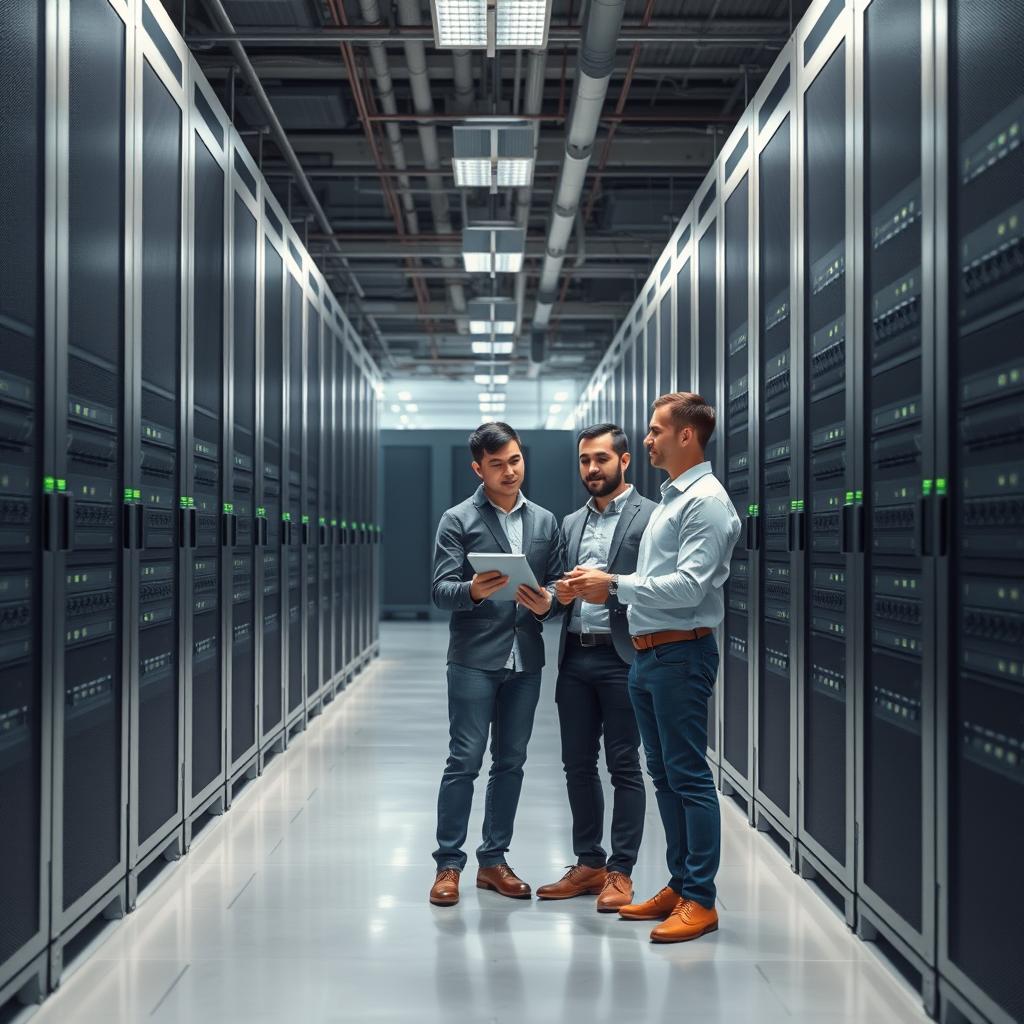
The magnitude of 1.4 GW is comparable to the capacity of a medium-sized nuclear power plant or the electricity demand of a major city. In the context of AI, this capacity not only powers the processors (GPUs, TPUs, and ASICs) necessary for intensive computing but also the cooling systems, which are critical for maintaining the operational temperature of thousands of servers. Large language models (LLMs) and other AI architectures require training cycles that can consume energy equivalent to that of small nations over prolonged periods, and their deployment for inference demands constant and robust capacity.
Technical and Economic Implications for the Data Center Sector
Technically, the acquisition of 1.4 GW implies substantial challenges in data center engineering and operation. It will require high-density electrical distribution systems, advanced cooling solutions (such as direct-to-chip liquid cooling), and deep integration with the local electricity grid. The Australian location could leverage its renewable energy potential and geopolitical stability but also presents logistical and regulatory challenges. The network infrastructure to transport the generated and processed data globally also becomes a critical factor.
Economically, this investment has multiple implications. First, it intensifies demand for real estate and infrastructure development in the data center sector, potentially driving up costs. Second, it exerts pressure on energy markets, which could stimulate investment in new generation capacities, especially in renewable sources to meet sustainability goals. Third, it underscores the competition among AI companies to secure computational resources, potentially leading to market consolidation or new collaboration strategies. Specialized hardware supply chains, particularly for graphics processing units (GPUs) from manufacturers like NVIDIA, will also experience sustained and increasing demand.
Historical Context and the Race for Computing Capacity
Historically, the evolution of computing has followed a trajectory of increasing resource demand. From mainframes to cloud computing, each advance has required an expansion of the underlying infrastructure. The current era of generative AI, characterized by models with billions of parameters, has accelerated this trend exponentially. Companies like Anthropic, OpenAI, and Google are engaged in a race for computing capacity, recognizing that resource availability is a direct limiting factor for innovation and technological leadership.
Anthropic's strategy of directly securing such massive data center capacity suggests a decrease in exclusive reliance on third-party cloud providers and a bet on proprietary control of its infrastructure. This allows for greater optimization, security, and long-term scalability but also requires considerable initial capital investment and deep operational expertise in managing large-scale infrastructures.
The future development of Artificial Intelligence will be intrinsically linked to the capacity of the global energy infrastructure to support its growth. The energy efficiency of algorithms and hardware, along with the availability of clean energy, will be critical checkpoints to monitor in the coming decade.
📖 Key Terms Glossary
❓ Frequently Asked Questions
What does the 1.4 GW capacity represent for Anthropic?
The 1.4 GW capacity represents a large-scale investment in energy infrastructure for Anthropic, aimed at supporting the massive expansion of its Artificial Intelligence operations, including the training and execution of large language models (LLMs).
Why is Australia relevant for this investment?
Australia offers favorable conditions such as political stability, access to vast land areas, potential for renewable energy sources, and developing network infrastructure, making it a strategic location for the construction and operation of large-scale data centers.
What are the energy implications of this AI expansion?
The energy implications include significant pressure on local and national electricity grids, an increase in energy demand, which may drive investments in new energy sources (including renewables), and the need for more efficient cooling solutions for data centers.
Support independent journalism 💸
The crypto ecosystem is volatile. If you decide to invest, do it safely using our affiliate links in the most trusted exchanges. You get a welcome bonus and we get a small commission.
Disclaimer: This content is not financial advice. Do your own research before investing.