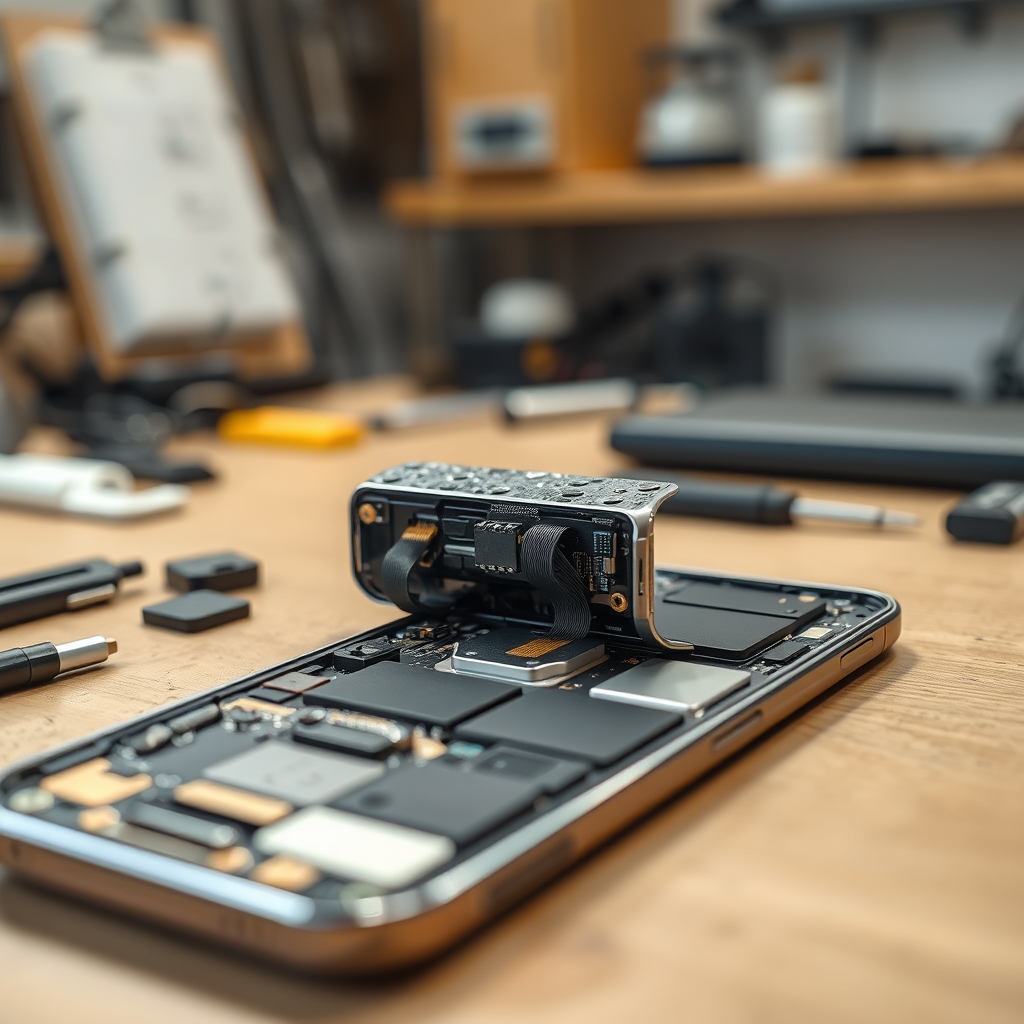
The technical teardown of the iPhone Duo published by iFixit on October 25, 2026, assigned the device a repairability score of 5 out of 10. This rating is the highest score awarded by the platform to a foldable phone to date, surpassing typical records in this mobile hardware segment.
The analysis breaks down the hinge architecture and flexible panel components following user reports of screen breakage and anomalous mechanical noises. The report's conclusions attribute these failures to unforeseen physical stresses derived from the internal articulation and the proximity of other electronic components within the chassis.
Optical mechanisms and flexible screen design
The internal screen of the iPhone Duo incorporates a matte surface layer with a nanotexture finish. This coating not only improves outdoor visibility by dispersing ambient reflections but also serves the technical function of masking the central crease that runs along the fold area.
When observing the panel under a microscope, iFixit technicians identified oval-shaped subpixels oriented at varying angles. According to the platform's report, this geometric distribution reduces the appearance of optical artifacts and helps mask the physical mark of the hinge on the organic light-emitting diode.
Repairability and dust tolerance of components
Regarding component replacement, the outer cover with nanotexture can be replaced independently without needing to intervene on the underlying display panel. However, in cases where the OLED matrix is damaged, the intervention requires a complete teardown with high costs, repeating a recurring problem in the foldable industry.
During luminescence particle exposure tests, residue ingress was detected in the USB-C port, acoustic grilles, and hinge gears, which caused roughness when opening the phone. Despite this fouling, the volume of dust introduced into the device was lower than that recorded in equivalent tests with the Samsung Z Fold8 and Google Pixel 11 Pro Fold.
The mechanical origin of the breakage and internal creaking
The iFixit team investigated the causes of the audible creaking and display fractures documented by users. According to the analysts, the hinge features a highly complex mechanical structure in which one of its parts may not descend in synchronization during the closing or opening movement.
A flexible flat cable configured in an accordion shape passes through that exact location, situated at the edge of the battery module. The technical hypothesis proposed by iFixit maintains that this arrangement could concentrate pressure at that point, causing the audible creaking reported by some users and the breakage of the screens. Apple did not immediately respond to a request for comment.
Publication of schematics and independent analysis
Apple published the official repair manual for the iPhone Duo on October 24, 2026. The release of this guide coincided with the publication of independent video analyses where a content creator claimed to have found the cause of the breakages in the device.
The iFixit report notes that while the outer nanotexture layer is relatively accessible for replacement, repairing the underlying OLED screen remains a costly and technically difficult process.