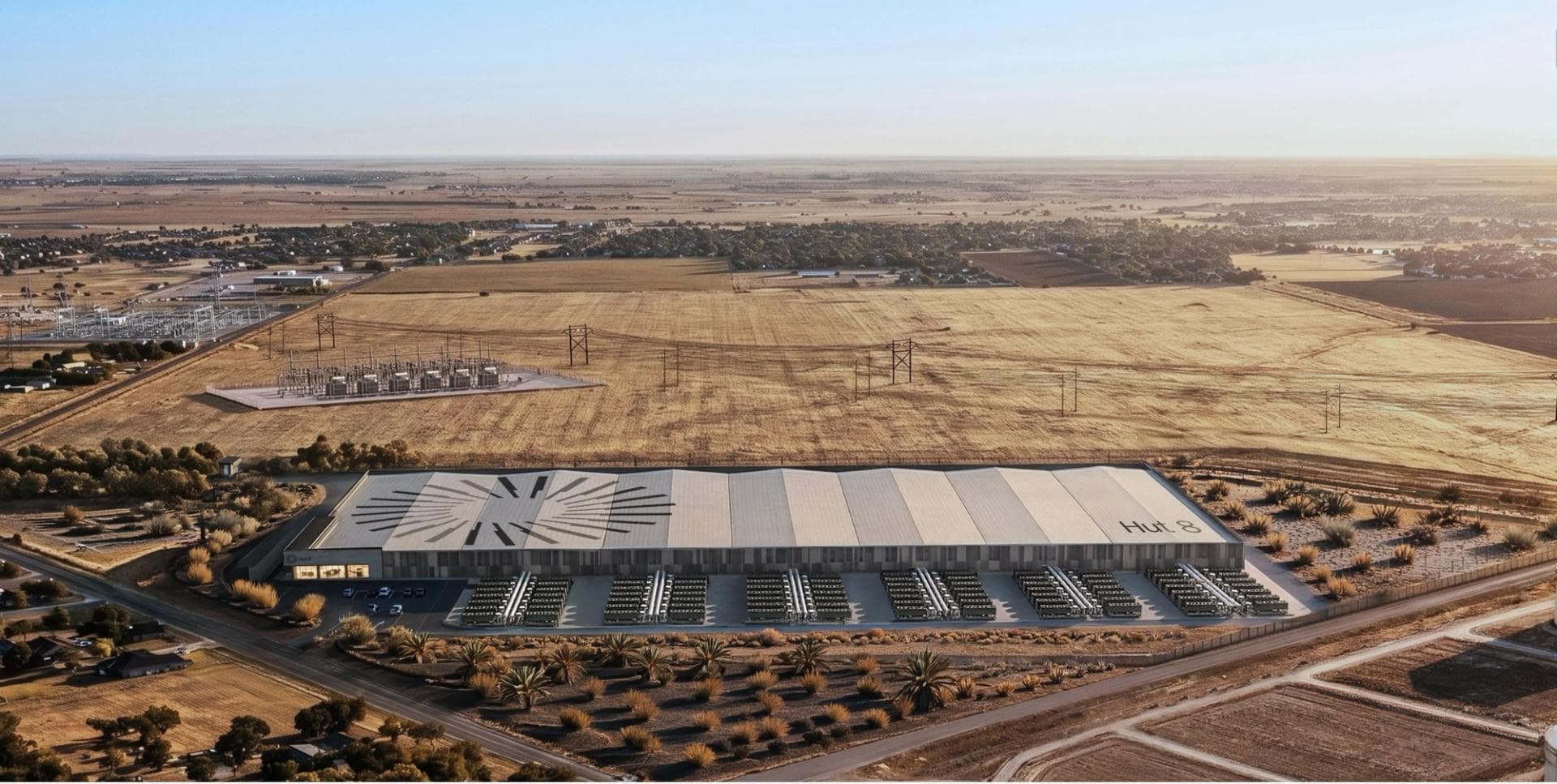
Hut 8 shares have surged by more than 30% following the announcement of a $9.8 billion lease agreement for artificial intelligence (AI) data center infrastructure. The deal, which constitutes the first phase of a large-scale project at the Beacon Point complex in Nueces County, Texas, sets a precedent for the conversion of cryptocurrency mining assets into high-density computing services.
Financial Structure and Expansion Potential
The hyperscale lease agreement has an initial value of $9.8 billion. The deal's structure includes option clauses that could increase the total transaction value to over $25 billion. This long-term revenue stream provides financial predictability that directly impacts the company's valuation, as reflected in its stock reaching new market highs.
Reconfiguring Computing Infrastructure
The project represents a technical transition from Bitcoin mining to the provision of AI infrastructure. The Nueces County complex, originally designed for digital asset mining operations, is being adapted to meet NVIDIA's technical specifications. This adaptation requires significantly higher power density management and cooling capacity than is necessary for Proof of Work (PoW) algorithms, as AI models demand much more stringent thermal stability and power delivery per rack.
Implications for the Data Center Sector
The commercialization of the Beacon Point campus marks the beginning of a revenue diversification strategy for Hut 8. The ability to integrate large-scale infrastructure under AI hardware standards positions the company within the cloud computing infrastructure supply chain. The success of this phase will depend on the technical execution of implementing the computing capabilities required to support Large Language Model (LLM) workloads and other AI training processes.
Scalability Projections and Infrastructure Control
The deployment of the complex's second phase will depend on the local power grid's ability to support the increased power density per rack. A critical control point will be the integration of advanced liquid cooling systems, which are necessary to maintain the thermal stability of GPU accelerators under intensive workloads.