Niobia installs AI agents on local machinery to resolve chip and battery defects
Startup Niobia deploys AI agents on local hardware to reduce critical failure diagnostics in semiconductor and battery production from days to minutes.
By Carlos "Emérito" López Lovera•13 oct 2026•3 min read
Key Takeaways
- The agents operate on independent GPU units mounted directly onto industrial manufacturing machinery.
- Clients manage their own cryptographic keys to prevent industrial property from being sent to public clouds.
- The technology initially focuses on thin-film coating, electroplating, and fluidized bed processes.
San Francisco-based startup Niobia introduced an artificial intelligence system on October 13, 2026, designed to locate and diagnose defects in semiconductor and battery manufacturing. The platform uses software agents that process information directly on production plant machinery to shorten failure analysis that typically requires several days of technical work to just minutes.
The development addresses interruptions in research and manufacturing phases within sectors facing high supply tension. When an anomaly occurs on an industrial line, the costs associated with downtime and technical analysis can reach millions of dollars, according to data provided by the project's founders during their participation in the TechCrunch Disrupt 2026 technology event.
The company was founded by Gaurav Jha and Harveen Kaur, both doctors in chemistry with previous work experience at semiconductor and battery component manufacturers. Their proposal is competing from October 13 to 15, 2026, as one of the twenty finalist companies in the Startup Battlefield competition in San Francisco.
Edge processing and conversational model assistance
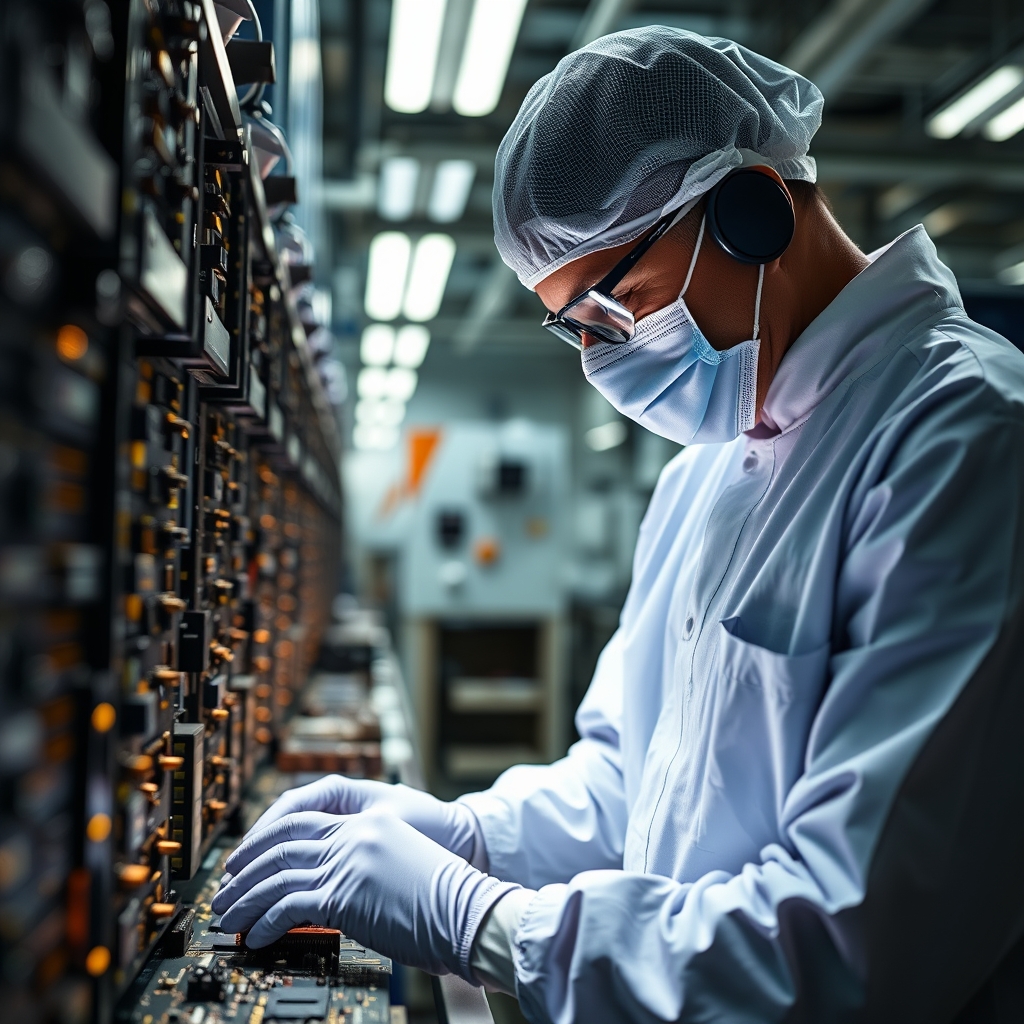
Niobia's architecture moves computing to the exact point where industrial machinery operates. The company installs independent graphics processing units mounted on production equipment to act similarly to a continuous physical sensor.
From that position, the software agents monitor assembly to identify microscopic anomalies, such as millimeter-scale scratches or pinhole-sized imperfections. The tool consolidates sensor readings into a unified interface rather than scattering performance metrics across multiple isolated logs.
Once the system detects a deviation, plant engineers can consult an automated conversational assistant to determine the source of the failure. This interaction reduces the diagnostic time required before restarting the production line, which usually requires pausing machinery while human teams manually examine discarded components.
Cloud isolation and client-held encryption keys
Niobia bases its agents on open-source artificial intelligence models that it trains internally with technical documentation and chemical research specialized in batteries and silicon wafers. Gaurav Jha explained that the choice of open models responds to the confidentiality restrictions required by industrial manufacturers.
None of the firm's corporate clients allow their proprietary data to leave for public cloud computing servers, where external platforms could use the information to train third-party systems. To protect intellectual property against the risk of industrial espionage between competing powers, Niobia gives companies exclusive control of their cryptographic keys. This mechanism prevents Niobia itself from being able to decrypt the logs captured in the factory.
Focus on chemical processes and progress toward factory autonomy
The company has focused its initial deployment on three critical areas of advanced manufacturing. The first is thin-film coating, which consists of applying protective or conductive layers at a micrometer scale onto a base material.
The second specialty is electroplating, an industrial procedure that uses electric current to deposit a uniform layer of metal onto a conductive surface. The third corresponds to fluidized bed reactions, a chemical technique in which solid particles are kept in suspension by an upward flow of gas or liquid to promote mass and heat transfer.
Niobia's ultimate operational goal involves the progressive increase of its software's autonomy. According to Jha, the company aspires to transform these assembly lines into factories capable of operating and self-correcting without requiring constant human intervention.
The determining factor to watch will be the practical performance of local agents against the variability of real production environments and the commercial adoption Niobia achieves after its presentation in San Francisco against the nineteen Startup Battlefield competitors.
❓ Frequently Asked Questions
Why does Niobia run its models on the machinery itself instead of using the cloud?
Battery and semiconductor manufacturers refuse to send confidential information to public clouds for fear of commercial leaks and the use of their data to train external models.
What types of industrial processes does the system serve in its initial phase?
The software specializes in three specific chemical procedures: film coating, electroplating, and fluidized bed reactions.
Support independent journalism 💸
The crypto ecosystem is volatile. If you decide to invest, do it safely using our affiliate links in the most trusted exchanges. You get a welcome bonus and we get a small commission.
Disclaimer: This content is not financial advice. Do your own research before investing.