Analyzing Cybersecurity Strategy in Enterprise AI Adoption
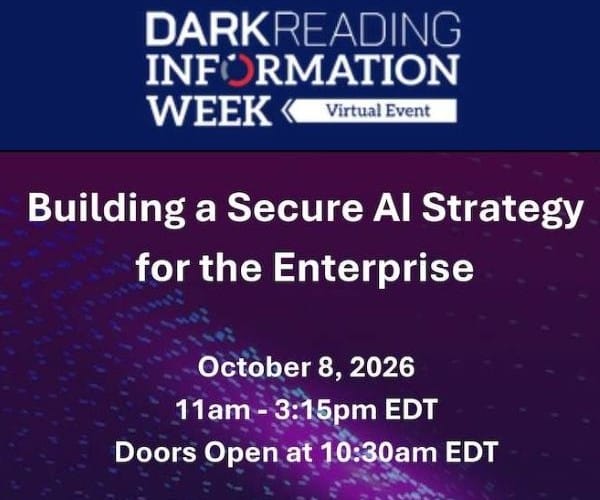
A Dark Reading virtual event will address building a robust security strategy for artificial intelligence in the enterprise, highlighting growing concerns over emerging attack vectors and the need for dedicated AI protection frameworks beyond traditional cybersecurity practices.
By Carlos "Emérito" López Lovera•29 ago 2026•3 min read
Key Takeaways
- Integrating AI into enterprise environments introduces novel attack vectors and specific cybersecurity risks that demand specialized attention.
- Developing an AI security strategy is crucial for mitigating vulnerabilities related to data integrity, privacy, and model robustness.
- Proactive risk management and the implementation of AI-specific security controls are critical for secure and scalable enterprise adoption of this technology.
The organization of a virtual event focused on building a security strategy for artificial intelligence (AI) in the enterprise, as announced by Dark Reading, highlights the maturing cybersecurity challenges associated with the widespread adoption of this technology. AI, encompassing everything from machine learning to natural language processing, is progressively being integrated into critical operations across various industries, leading to an expanded attack surface and the emergence of risk typologies not accounted for by conventional IT security models.
Technical Implications of AI Security
Technically, AI security diverges from traditional cybersecurity in several aspects. While system security focuses on protecting infrastructure, networks, and applications against unauthorized access or disruptions, AI security must consider the integrity and confidentiality of training data, model robustness and fairness, and resilience against adversarial attacks. Training data, for example, can be targeted by data poisoning attacks, where malicious data is inserted to manipulate the model's future behavior. Likewise, AI models are susceptible to evasion attacks, where slightly modified inputs trick the model into misclassifying information, or model extraction attacks, which seek to replicate the internal logic of a proprietary algorithm.
The implementation of AI in the enterprise involves managing large volumes of data, often sensitive, that feed the algorithms. This magnifies privacy and regulatory compliance risks. An AI security strategy must, therefore, incorporate privacy-by-design principles, data anonymization and pseudonymization techniques, and granular access control mechanisms for datasets and generated models. The MLOps (Machine Learning Operations) phase also presents critical security points, from data ingestion to the deployment and continuous monitoring of models in production.
Economic and Regulatory Context
From an economic perspective, the lack of a robust AI security strategy can lead to significant consequences. Security breaches affecting AI systems can result in direct financial losses due to operational disruptions, intellectual property theft (AI models themselves can be valuable assets), or regulatory penalties. A company's reputation can also be compromised if its AI systems are manipulated to generate biased or inaccurate results, affecting customer and market trust. Conversely, proactive investment in AI security can safeguard business continuity, protect critical assets, and facilitate a competitive advantage by enabling faster and safer adoption of innovative technologies.
The global regulatory framework is beginning to address the inherent risks of AI. Initiatives such as the European Union's AI Act and the NIST (National Institute of Standards and Technology) AI Risk Management Framework in the United States establish guidelines and requirements for the security, transparency, and accountability of AI systems. Companies operating internationally must anticipate and comply with these emerging regulations, which reinforces the need for a well-defined and adaptable AI security strategy.
The focus on building an enterprise AI security strategy is not an isolated initiative but a direct response to the convergence of rapid technological evolution and the increasing sophistication of cyber threats. Implementing specific security controls for the AI lifecycle, from research and development to deployment and maintenance, will be a determining factor in the operational resilience and competitiveness of organizations in the digital landscape.
📖 Key Terms Glossary
❓ Frequently Asked Questions
Why is an AI security strategy critical?
An AI security strategy is critical because AI integration introduces unique vulnerabilities, such as data poisoning or adversarial attacks, which are not covered by traditional cybersecurity defenses. This is essential for protecting model integrity, data privacy, and business continuity.
What types of security risks does enterprise AI involve?
Risks include data poisoning attacks, model evasion and extraction attacks, data privacy breaches, algorithmic result manipulation, and failures in complying with emerging regulations, which can lead to financial and reputational losses.
Support independent journalism 💸
The crypto ecosystem is volatile. If you decide to invest, do it safely using our affiliate links in the most trusted exchanges. You get a welcome bonus and we get a small commission.
Disclaimer: This content is not financial advice. Do your own research before investing.