Advances in Low-Cost Submersible Technology and its Impact on Deep-Sea Mining
The deployment of low-cost, oblong submersibles to depths of 6,000 meters is redefining the operational viability of scientific exploration and mineral resource extraction in the abyssal zone.
By Carlos "Emérito" López Lovera•6 may 2026•2 min read
Key Takeaways
- New submersibles operating at depths of 6,000 meters.
- Reduced economic barriers to entry for seafloor mining.
- Increased data collection density through low-cost fleets.
Technical Deployment of Submersibles in the Abyssal Zone
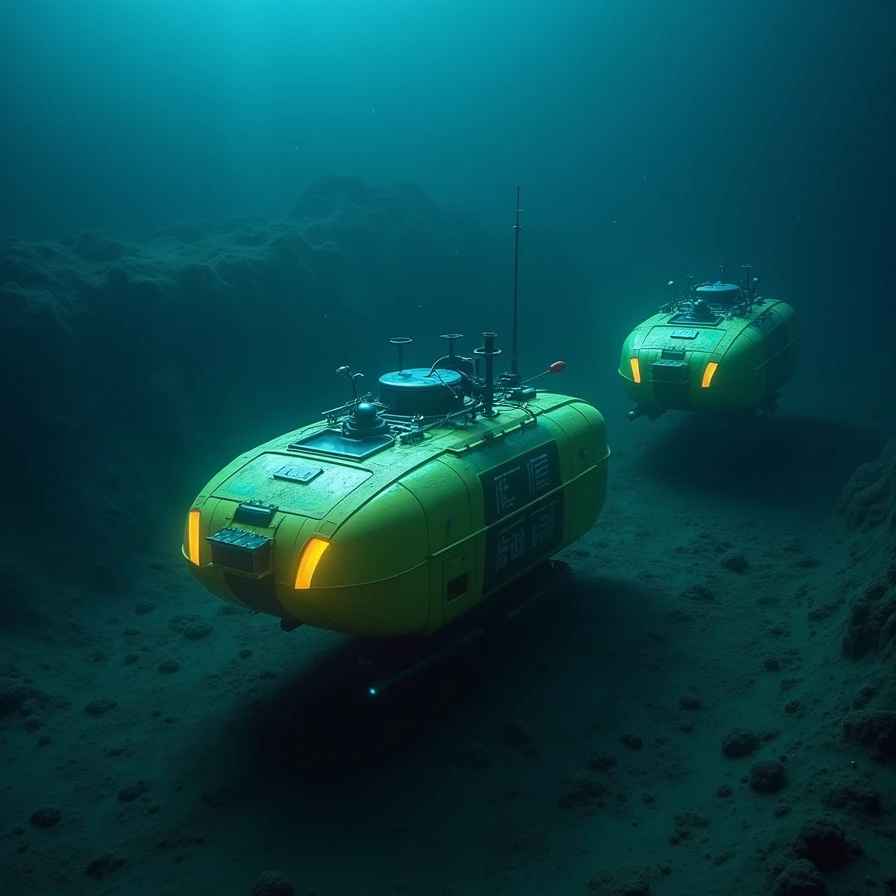
The recent descent of two oblong, neon-colored submersibles to depths of 6,000 meters represents a significant advance in autonomous underwater vehicle (AUV) engineering. The ability to operate in the abyssal zone demands structural resilience capable of withstanding pressures exceeding 600 atmospheres. The implementation of low-cost designs suggests a transition from highly specialized, high-cost research platforms to distributed fleets of lower unit value, enabling greater geographical coverage within the same operational period.
Impact on the Economic Viability of Deep-Sea Mining
The reduction in deployment costs through seafloor-hopping submersibles is altering the cost structure of deep-sea mining. Historically, polymetallic nodule prospecting has been limited by the high CAPEX of support vessels and crewed submersibles. Low-cost technology enables denser and more frequent prospecting, reducing the financial risk associated with identifying deposits of cobalt, nickel, and manganese—minerals critical for the energy transition.
Implications for Scientific Data Collection
From a scientific perspective, accessibility to depths of 6,000 meters facilitates continuous monitoring of critical ecosystems. The ability of these vehicles to traverse the seafloor enables high-resolution mapping and more comprehensive biological sampling. Such data are fundamental for the regulatory frameworks of the International Seabed Authority (ISA), which requires technical evidence for resource management in international waters.
Technical Outlook
The scalability of these systems will depend on the evolution of battery energy density and the reliability of inertial navigation systems in environments where GPS signals are nonexistent.
📖 Key Terms Glossary
❓ Frequently Asked Questions
What technical depth have these new devices reached?
The submersibles have successfully operated in environments up to 6,000 meters deep.
What is the primary impact of this technology on the industry?
The reduction in operational costs allows for increased exploration frequency and superior economic viability for seafloor mining.
Support independent journalism 💸
The crypto ecosystem is volatile. If you decide to invest, do it safely using our affiliate links in the most trusted exchanges. You get a welcome bonus and we get a small commission.
Disclaimer: This content is not financial advice. Do your own research before investing.