Bitcoin: Technical Analysis of Price and Market Activity Divergence
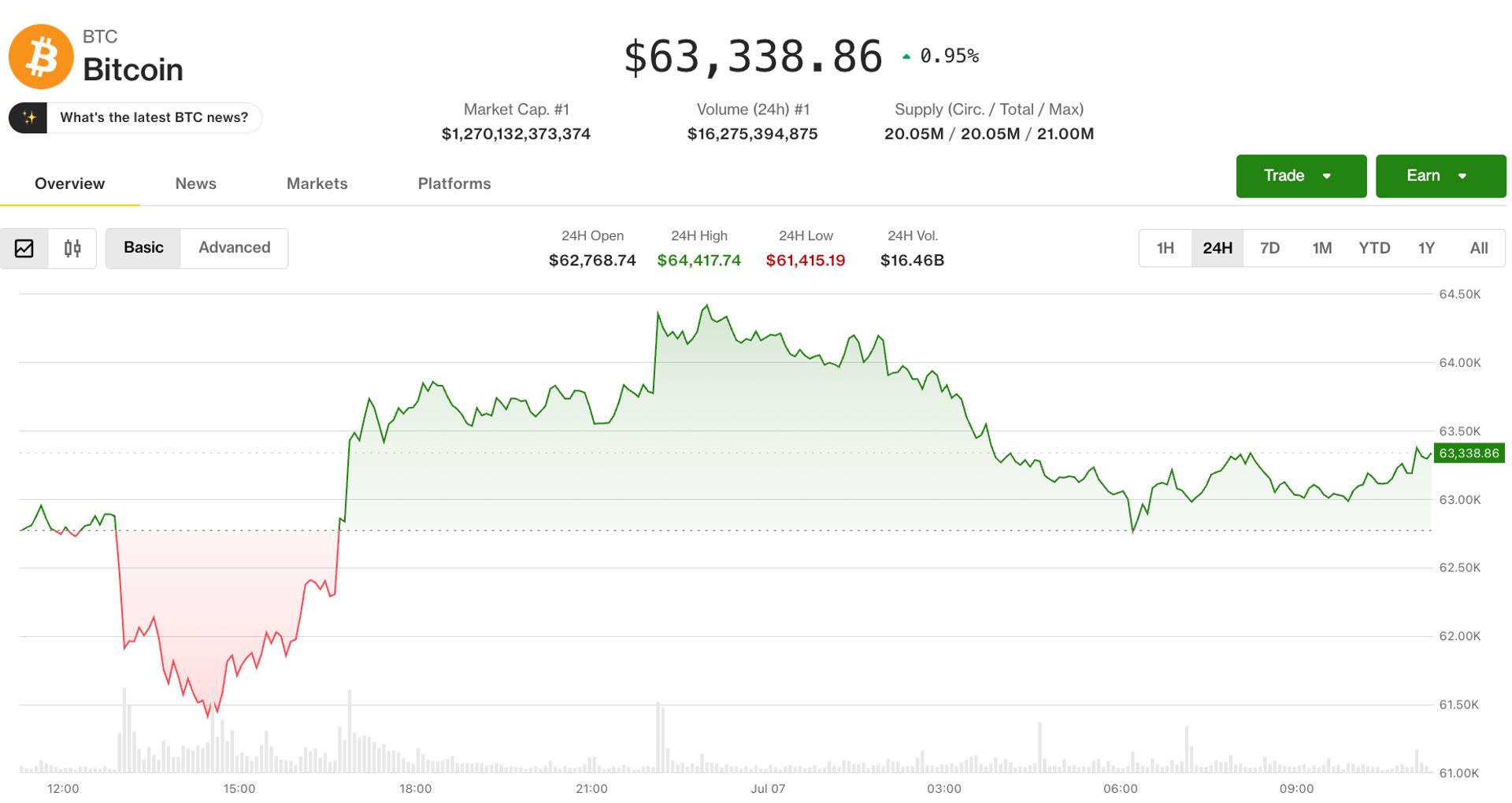
Bitcoin has retreated from a two-week high of $64,500. This movement is linked to a decrease in derivatives open interest and weakened spot demand, raising questions about the sustainability of its 8.4% July advance. A lack of significant buying volume suggests low conviction in the asset's current bullish trajectory.
By Carlos "Emérito" López Lovera•7 jul 2026•3 min read
Key Takeaways
- Bitcoin experienced a price retraction after reaching $64,500, marking a halt to its July advance.
- A drop in derivatives contract open interest indicates reduced speculative activity and leverage in the BTC market.
- Weak spot demand suggests insufficient direct purchases by investors, which is critical for sustaining a price rally.
Bitcoin (BTC) has registered a retraction from the $64,500 level, which represented a two-week high. This downward movement follows an 8.4% advance during the month of July.
Analysis of Open Interest and Spot Demand
The deceleration in BTC's price correlates with two key factors observed in the market: a decrease in derivatives contract open interest and weakened spot demand. Open interest, which measures the total number of outstanding futures or options contracts that have not been settled, is a critical indicator of speculative activity and leveraged capital in the market. A reduction in this metric suggests that traders are closing existing positions, which can be interpreted as a decline in directional confidence or a phase of profit-taking.
Historically, sustainable Bitcoin price rallies have been accompanied by an increase in open interest, indicating a flow of new capital and an increase in leverage supporting the upward movement. The current decrease, conversely, suggests a reduction in liquidity and speculative commitment, which limits the price's ability to maintain its upward trajectory.
Concurrently, the weakness in spot demand underscores the absence of significant direct buying volume for the asset in spot markets. Spot demand is fundamental for organic price formation, as it represents the actual acquisition of Bitcoin by investors, whether retail or institutional. When spot demand is insufficient, any price advance tends to be more vulnerable, as it lacks the backing of underlying asset accumulation. The lack of a constant flow of capital directly into the asset can generate latent selling pressure or an inability to absorb existing supply.
Technical and Economic Implications
From a technical perspective, the combination of decreasing open interest and low spot demand indicates a lack of conviction at current price levels and in the future direction. This suggests that July's advance may have been driven by short-term factors or by the closing of short positions, rather than fundamental accumulation. The sustainability of any price rally in a volatile asset like Bitcoin depends on the continuous influx of fresh capital and increasing commitment from market participants. The absence of these current conditions poses a direct challenge to the continuation of the bullish momentum.
Economically, this situation implies that investors are not allocating significant capital to buying BTC at current prices, which could be due to macroeconomic uncertainty, risk assessment, or the search for opportunities in other assets. The lack of effective demand exerts downward or sideways pressure on the price, making each recovery attempt more costly in terms of volume and less likely to be sustained.
The technical control point to observe in the short term will be BTC's ability to consolidate above the $62,000 level. A sustained break below this threshold, accompanied by a continued decrease in open interest and spot demand, would indicate a higher probability of a correction towards lower support levels.
📖 Key Terms Glossary
❓ Frequently Asked Questions
What does a drop in open interest imply for Bitcoin's price?
A drop in open interest suggests traders are closing positions, which can indicate reduced bullish sentiment or profit-taking, limiting price momentum.
Why is spot demand relevant for the sustainability of a rally?
Spot demand represents direct asset purchases. Without robust spot demand, price advances are often driven by derivatives speculation, making them less sustainable and more vulnerable to corrections.
Support independent journalism 💸
The crypto ecosystem is volatile. If you decide to invest, do it safely using our affiliate links in the most trusted exchanges. You get a welcome bonus and we get a small commission.
Disclaimer: This content is not financial advice. Do your own research before investing.