Cloud Cybersecurity: Protecting Business Assets in the Age of AI
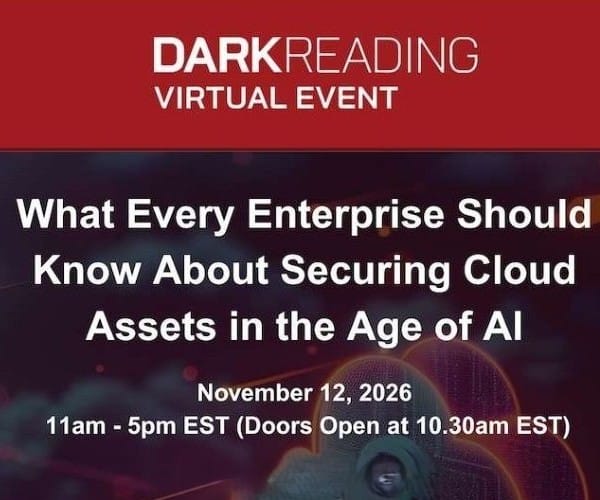
A forthcoming virtual event will address essential strategies for protecting assets in enterprise cloud environments, highlighting the critical intersection with artificial intelligence and the security implications this technology introduces into cloud infrastructure.
By Carlos "Emérito" López Lovera•29 ago 2026•2 min read
Key Takeaways
- Protecting cloud assets is a critical priority for businesses in the current technological landscape.
- The integration of artificial intelligence introduces new dimensions and challenges to the cloud cybersecurity landscape.
- Organizations must develop and implement specific strategies to mitigate risks in AI-powered cloud infrastructures.
The security of cloud assets represents a constantly evolving technical and operational challenge for businesses. The proliferation of cloud services and the migration of critical infrastructures to decentralized environments have expanded the attack surface, demanding a continuous re-evaluation of protection strategies.
The Convergence of Cloud and Artificial Intelligence
The announcement of a virtual event focused on protecting cloud assets in the age of artificial intelligence underscores the relevance of this technological convergence. Historically, cloud computing has offered scalability and efficiency, but it has also introduced complexities in access management, network segmentation, and data residency. Artificial intelligence, for its part, is increasingly integrated into business operations, from process automation to predictive analytics.
The interaction between cloud and AI generates a new paradigm of risks and opportunities in cybersecurity. On one hand, AI systems can be exploited as attack vectors, compromising data integrity or service availability. This includes training data poisoning attacks, model evasion, or theft of intellectual property contained in algorithms. On the other hand, AI is a fundamental tool for strengthening defenses, enabling advanced anomaly detection, automated incident response, and optimized vulnerability management in large-scale cloud environments.
Technical and Economic Implications for Businesses
For businesses, protecting cloud assets involves implementing robust security architectures that span from Identity and Access Management (IAM) to Cloud Security Posture Management (CSPM) and Cloud Workload Protection Platforms (CWPP). AI adds a layer of complexity by requiring the security of machine learning models, training data, and inference platforms.
The economic implications are significant. Cloud security breaches can result in direct financial losses due to operational disruptions, regulatory fines for non-compliance with data protection regulations (such as GDPR or CCPA), and reputational damage. Investment in AI-based security solutions and specialized personnel becomes an imperative to mitigate these risks. Adopting security frameworks like NIST CSF or ISO 27001, adapted to the specificities of cloud and AI, is crucial for establishing a solid foundation.
Projections and Control Points
The cloud cybersecurity landscape, influenced by AI, will continue to evolve. Businesses will need to monitor the emergence of new AI-specific threats and the maturity of defensive solutions. The ability of organizations to integrate security as an inherent component of the cloud application development lifecycle and AI models (DevSecOps and MLOps) will be a critical factor for operational resilience.
📖 Key Terms Glossary
❓ Frequently Asked Questions
What are cloud assets?
Cloud assets are the data, applications, infrastructures, and services hosted on cloud computing platforms, such as virtual servers, databases, and software as a service.
How does artificial intelligence impact cloud security?
AI impacts cloud security in two ways: it introduces new attack vectors due to the complexity of AI-based systems and offers advanced tools for threat detection, vulnerability analysis, and security response automation.
Support independent journalism 💸
The crypto ecosystem is volatile. If you decide to invest, do it safely using our affiliate links in the most trusted exchanges. You get a welcome bonus and we get a small commission.
Disclaimer: This content is not financial advice. Do your own research before investing.