US Directive Restricts Global Access to Anthropic's Advanced AI Models
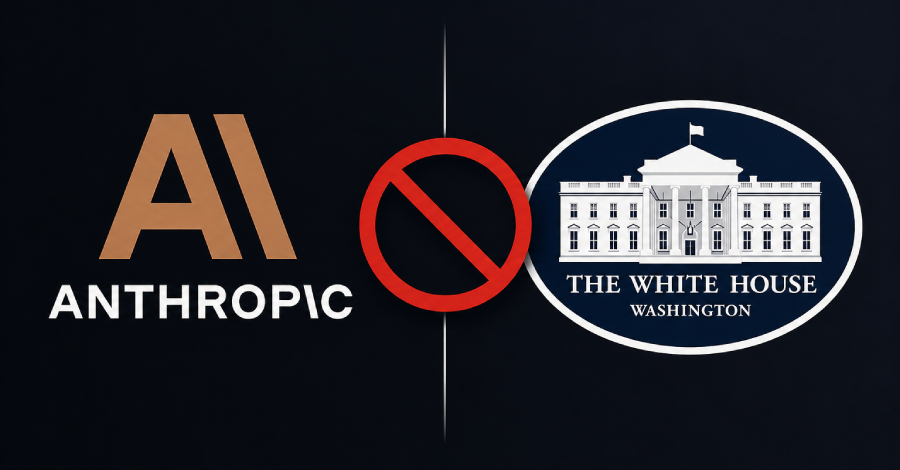
The U.S. government has ordered Anthropic to suspend access to its most advanced artificial intelligence models, Claude Fable 5 and Mythos 5, for all foreign nationals, regardless of their geographic location. The directive cites national security concerns, forcing Anthropic to abruptly disable access to these models.
By Carlos "Emérito" López Lovera•13 jun 2026•3 min read
Key Takeaways
- Anthropic disabled access to its Claude Fable 5 and Mythos 5 models for foreign nationals by order of the U.S. government.
- The directive is based on national security concerns, affecting users both inside and outside the United States.
- This action sets a significant precedent in regulating global access to advanced AI technologies.
On June 13, 2026, Anthropic, a prominent entity in artificial intelligence development, announced the immediate suspension of access to its most advanced AI models, Claude Fable 5 and Mythos 5. This decision was implemented in response to a directive issued by the United States government, which cited national security reasons. The order specifically restricts access for all individuals of foreign nationality, regardless of their physical location relative to U.S. territory.
Technical and Regulatory Implications
The government's action regarding Anthropic represents a direct intervention in the global availability of cutting-edge artificial intelligence technology. The Claude Fable 5 and Mythos 5 models, classified as the company's most advanced, possess significant capabilities in natural language processing, content generation, and complex reasoning. Restricting access to these tools due to national security concerns underscores a growing apprehension about the dual-use potential of advanced AI, where civilian innovations could have military or strategic applications. This measure reflects a tightening of the regulatory stance on the export and access to emerging technologies deemed strategically important.
From a technical perspective, the abrupt disabling implies user segregation based on nationality criteria, which introduces complexities in infrastructure and authentication management. Anthropic's developers have had to implement mechanisms to identify and block access for specific users, potentially requiring substantial modifications to their Identity and Access Management (IAM) systems. The global interoperability of AI models, previously assumed as a standard, is beginning to be re-evaluated through a geopolitical lens, anticipating potential fragmentations in the AI development and application ecosystem.
Historical and Economic Context
Historically, governments have implemented controls over the export of sensitive technologies, such as cryptographic software, high-performance computing hardware, or nuclear components. The directive concerning Anthropic's AI models extends this paradigm to artificial intelligence models as strategic assets. This suggests that AI's algorithmic capabilities and trained data are now considered as critical to national security as physical hardware or proprietary software.
Economically, the measure could impact Anthropic's market strategy. The exclusion of a considerable segment of international users could reduce the revenue generated by these models and affect the company's expansion into markets outside the United States. Furthermore, this directive may incentivize other countries to develop their own sovereign AI capabilities or to impose reciprocal restrictions on access to their technologies. The global AI landscape could evolve towards a more fragmented model, where user nationality or the model's development location determines its accessibility and functionality.
The government action also sends a clear signal to other AI companies about imminent regulatory oversight. Companies developing advanced models might be compelled to integrate national security considerations into their development lifecycles, from the research phase to implementation, potentially slowing down open innovation and increasing operational costs due to stricter compliance requirements.
Technical Outlook
The incident with Anthropic sets a precedent for future government interventions in the AI sector. It is likely that the debate over classifying AI models as critical technologies and their potential application under export control regimes or national security regulations will intensify. AI developers will need to monitor the evolution of these policies, as they could directly influence the architecture of their models, the distribution of their services, and the structure of their global operations. The definition of 'foreign nationality' in the context of AI and cyberspace will continue to be a critical control point for technological governance.
📖 Key Terms Glossary
❓ Frequently Asked Questions
Why did Anthropic disable its AI models?
Anthropic disabled access to its Claude Fable 5 and Mythos 5 models due to a direct order from the United States government, citing national security reasons.
Which Anthropic AI models are affected by this directive?
The specific models affected are Claude Fable 5 and Mythos 5, which Anthropic describes as its most advanced artificial intelligence models.
Who are the users affected by the access restriction?
The restriction affects all users of foreign nationality, regardless of whether they are within or outside the territory of the United States.
Support independent journalism 💸
The crypto ecosystem is volatile. If you decide to invest, do it safely using our affiliate links in the most trusted exchanges. You get a welcome bonus and we get a small commission.
Disclaimer: This content is not financial advice. Do your own research before investing.