Enterprise AI Security Strategies: An Analysis of the Emerging Need
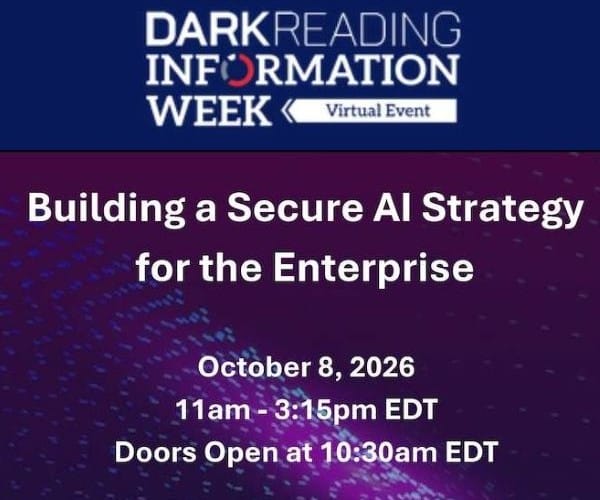
A virtual event announcement highlights the critical need for integrating cybersecurity into enterprise AI from early development stages, reflecting growing concerns over risks like data integrity and model robustness against adversarial attacks.
By Carlos "Emérito" López Lovera•5 sept 2026•3 min read
Key Takeaways
- AI security has become an essential component of enterprise strategy, not an appendage, due to the rapid integration of these technologies into critical operations.
- AI cybersecurity challenges range from data supply chain protection to model resilience against manipulation, requiring a holistic approach.
- The economic implications of a deficient AI security strategy include reputational risks, regulatory penalties, and operational losses, justifying proactive investment in robust defenses.
The virtual event titled "Building a Secure AI Strategy for the Enterprise," scheduled for September 5, 2026, by Dark Reading, signals an evolution in the prioritization of cybersecurity within the realm of artificial intelligence. The existence of an event specifically dedicated to this topic, with more than two years' anticipation, indicates the consolidation of AI security as a fundamental pillar in the enterprise strategic agenda, not as a secondary consideration.
Technical Implications of AI Security
The implementation of AI systems in the corporate environment introduces specific attack vectors and vulnerabilities that transcend traditional cybersecurity paradigms. An AI security strategy must address multiple technical dimensions. Firstly, the integrity and privacy of training data are critical. Data poisoning attacks, where malicious information is injected into the training set, can compromise the accuracy and reliability of an AI model, leading to erroneous or biased decisions. Protecting sensitive data used to train models, especially in sectors like finance or healthcare, is equally imperative to comply with regulations such as GDPR or HIPAA.
Secondly, the robustness of AI models against adversarial attacks is a significant technical challenge. These attacks seek to manipulate a model's inputs to force an incorrect output without perceptibly altering the data for a human observer. Examples include misclassifying images or evading intrusion detection systems. Developing models resilient to these techniques requires research into defense techniques, such as adversarial training and anomalous input detection, which adds complexity to the AI development lifecycle.
Finally, the security of the underlying infrastructure supporting AI systems, including cloud computing platforms, containers, and APIs, remains a critical point. The software and model supply chain, from component acquisition to deployment, presents multiple vulnerability points that must be audited and protected.
Economic and Strategic Implications
The lack of a robust AI security strategy carries direct and indirect economic implications. A security incident in an AI system can result in the leakage of sensitive data, leading to substantial regulatory fines. For example, penalties under GDPR can reach up to 4% of a company's annual global turnover. Beyond fines, reputational damage can be significant, eroding the trust of customers and business partners.
From an operational perspective, a successful attack against an AI system can disrupt critical services, from banking fraud detection to supply chain optimization, resulting in direct financial losses. Investment in a proactive AI security strategy, including risk assessment, secure design, continuous testing, and incident response, is economically justified as a risk mitigation measure. Companies that prioritize AI security not only protect their assets but also build a competitive advantage by demonstrating reliability and regulatory compliance in an evolving technological landscape.
The focus on a comprehensive strategy underscores the need for cross-functional collaboration within the enterprise, involving cybersecurity teams, AI developers, legal, and risk management. The maturity of the AI market will dictate the need for specific AI security standards and certifications, which will eventually influence investment decisions and the valuation of companies operating with these technologies.
Attention to AI security will continue to be a determining factor in the adoption and long-term success of these technologies in the enterprise. The ability to mitigate inherent risks will be a key differentiator.
📖 Key Terms Glossary
❓ Frequently Asked Questions
Why is security critical in enterprise AI?
AI security is critical to protect sensitive data, maintain model integrity, prevent adversarial attacks, and comply with regulations, thereby mitigating operational and reputational risks.
What are the main cybersecurity challenges in AI implementation?
Challenges include protection against data poisoning attacks, model evasion, training data leakage, and ensuring the explainability and auditability of AI systems.
Support independent journalism 💸
The crypto ecosystem is volatile. If you decide to invest, do it safely using our affiliate links in the most trusted exchanges. You get a welcome bonus and we get a small commission.
Disclaimer: This content is not financial advice. Do your own research before investing.