Artificial Intelligence Redefines Risk Management in Foreign Exchange Markets
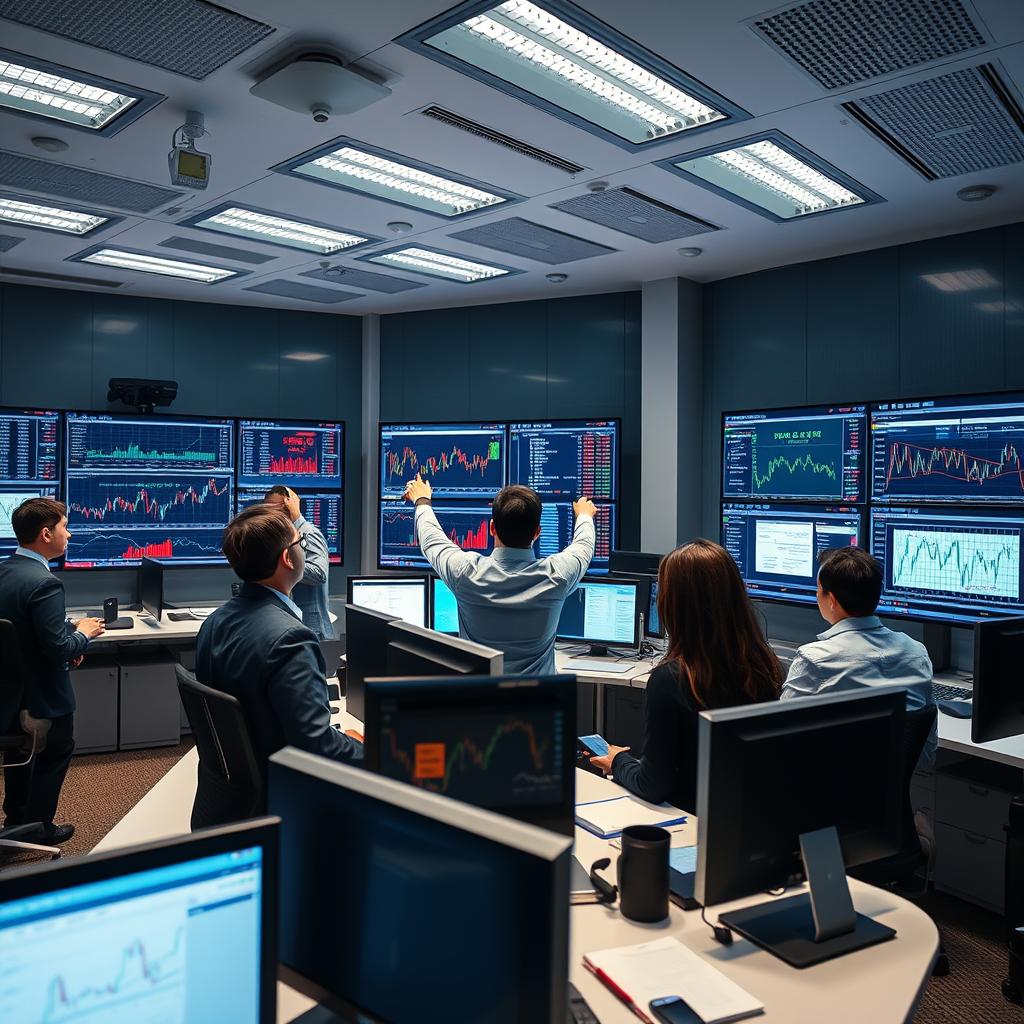
The integration of Artificial Intelligence (AI) algorithms is revolutionizing hedging strategies in foreign exchange (Forex) markets. This shift focuses on optimizing currency pair movement prediction and dynamic risk management, impacting financial institutions' liquidity, volatility, and operational efficiency. AI enables data analysis at unprecedented scale and speed, reconfiguring traditional trading and currency risk mitigation models.
By Carlos "Emérito" López Lovera•4 jul 2026•3 min read
Key Takeaways
- AI optimizes currency movement prediction through complex data analysis, enhancing the effectiveness of hedging strategies.
- Integrating AI models into trading platforms automates the execution of risk strategies, impacting Forex market liquidity and structure.
- Challenges include the need for advanced computational infrastructure and mitigating risks associated with algorithmic biases or systemic failures in interconnected markets.
The Impact of Artificial Intelligence on Currency Risk Management
The foreign exchange market, with a daily trading volume exceeding $7 trillion, is undergoing a structural reconfiguration driven by the integration of artificial intelligence (AI). Historically, currency risk hedging strategies relied on traditional econometric models and fundamental or technical analysis. The introduction of AI, particularly through machine learning and deep learning algorithms, has elevated predictive capabilities and operational efficiency in this sector.
AI enables the processing and analysis of massive datasets (big data) with a speed and granularity unattainable by conventional methods. This data includes macroeconomic indicators, capital flows, real-time financial news, social media sentiment analysis, and historical trading patterns. By identifying non-linear correlations and detecting anomalies, AI models can predict currency pair movements with a higher probability of success. This capability directly translates into optimized hedging, reducing exposure to volatility and minimizing potential losses from adverse fluctuations.
Technological Context and the Evolution of Automation
The adoption of AI in currency markets is not an isolated event but a continuation of a trend towards automation and algorithmic trading that began in the 1990s. Initially, algorithms were used for high-frequency trading (HFT) execution and statistical arbitrage. AI represents a qualitative evolution, moving from programmed execution of predefined rules to the ability of systems to learn, adapt, and generate new strategies autonomously. Architectures such as recurrent neural networks (RNNs) or transformer networks are capable of capturing complex temporal dependencies in financial time series, overcoming the limitations of linear models.
Financial institutions are investing in advanced computational infrastructure, including graphic processing units (GPUs) and cloud computing, to support the training and implementation of these data-intensive models. This not only facilitates price movement prediction but also proactive liquidity management, capital allocation optimization, and the identification of inter-market arbitrage opportunities that were previously imperceptible due to processing limitations.
Economic Implications and Control Points
The economic implications of this transformation are multifaceted. On one hand, greater market efficiency is projected, with tighter spreads and reduced transaction costs for institutional participants. The ability to execute more precise and dynamic hedges can mitigate systemic risk for companies with significant currency exposure. On the other hand, the increasing reliance on AI algorithms introduces new risks. The convergence of algorithmic strategies could exacerbate volatility during market stress, leading to 'flash crashes' or disproportionate price movements. The opacity of some 'black-box' models poses regulatory and supervisory challenges in terms of attributing responsibility and understanding the factors driving trading decisions.
A critical control point will be the ability of regulators to develop frameworks that address the complexity and speed of AI-driven markets without stifling innovation. The interconnection of these systems with other areas of financial technology, including cybersecurity to protect sensitive data and proprietary models, will be fundamental. The evolution of algorithms' ability to adapt to structural market changes and avoid overfitting to historical data will be a decisive factor in their long-term sustainability and reliability.
📖 Key Terms Glossary
❓ Frequently Asked Questions
How does AI modify hedging strategies in Forex?
AI enhances hedging by processing massive volumes of economic, geopolitical, and market data in real-time, enabling more accurate predictions of currency movements and dynamic optimization of risk portfolios.
What are the economic implications of AI in foreign exchange markets?
The implications include increased efficiency in capital allocation, reduced operational costs for financial institutions, potential increases in liquidity, and simultaneously, the introduction of new risk vectors related to algorithmic complexity and market interconnectivity.
What kind of data does AI use for these predictions?
AI utilizes a variety of data including macroeconomic indicators (interest rates, inflation, GDP), global trade flow data, financial news, geopolitical events, and market sentiment data, integrating both structured and unstructured sources.
Support independent journalism 💸
The crypto ecosystem is volatile. If you decide to invest, do it safely using our affiliate links in the most trusted exchanges. You get a welcome bonus and we get a small commission.
Disclaimer: This content is not financial advice. Do your own research before investing.