ASML: A Tech Giant's Unwavering Confidence in Its Technological Frontier
ASML CEO Christophe Fouquet has reaffirmed his company's dominant and unassailable position in the manufacturing of lithography equipment. This declaration underscores the uniqueness of its technology within the global semiconductor supply chain.
By Carlos "Emérito" López Lovera•hace 2 horas•3 min read
Key Takeaways
- ASML holds a virtual monopoly in EUV lithography technology, essential for the most advanced chips.
- CEO Fouquet's confidence is rooted in nearly insurmountable technological and capital entry barriers for potential competitors.
- ASML's relevance extends beyond technology, impacting geopolitics and the technological sovereignty of nations.
At a time of increasing global competition and geopolitical tensions surrounding technology, the statement by Christophe Fouquet, ASML's CEO, resonates with unusual authority. Fouquet, who took the helm of the company in 2024, expressed unshakeable confidence in ASML's position: “Nobody is coming for us.” This assertion, made in the context of the Milken Institute Global Conference, is not mere corporate bravado but a reflection of the structural reality of an industry where ASML holds a virtual monopoly in a critical niche.
The Context of Technological Hegemony
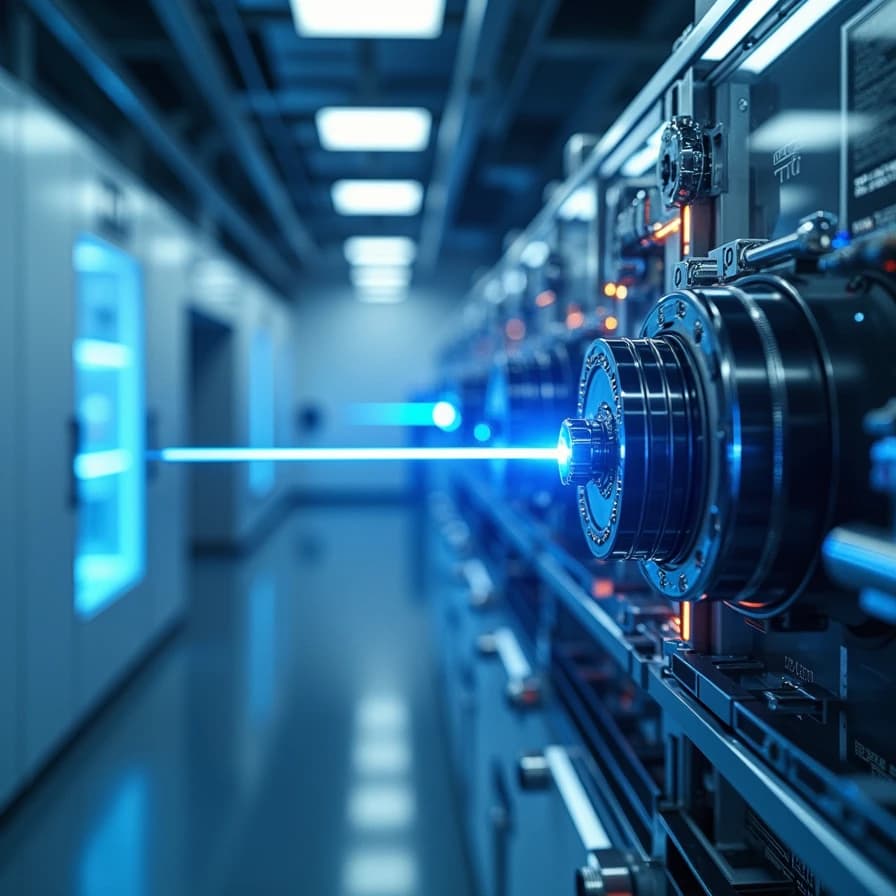
ASML is not just an equipment manufacturer; it is the silent architect of the digital age. Its dominance in Extreme Ultraviolet (EUV) lithography is the cornerstone upon which the world's most advanced processors are built. EUV technology, the result of decades of research and billions of dollars in investment, enables the engraving of circuits with nanometric precision that no other company has managed to replicate on a commercial scale. This level of sophistication and the entry barrier represented by capital invested in R&D, along with a vast intellectual property portfolio, constitute an almost impenetrable defensive moat. The global reliance on ASML by giants like TSMC, Samsung, and Intel underscores its irreplaceable role in the semiconductor value chain.
Economic and Geopolitical Implications
ASML's position transcends the purely technological realm to delve into the economic and geopolitical sphere. The ability to produce advanced chips is synonymous with economic power and national security in the 21st century. Export restrictions on ASML equipment, driven by powers like the United States, are not merely commercial measures; they are foreign policy tools designed to shape the global technological balance of power. Fouquet's confidence, therefore, refers not only to the absence of direct competitors but also to the resilience of its business model in the face of supply chain fragmentation and regulatory pressures seeking to limit access to its technology.
Analysis of Strategic Confidence
The CEO's statement suggests a comprehensive assessment of risks and opportunities. It is not unfounded optimism but a sober reading of industry dynamics. The resources required to develop a viable alternative to EUV lithography would be astronomical, and the time to market, prohibitive. This allows ASML to operate with a long-term visibility uncommon in the technology sector. For investors, this stability translates into a technological infrastructure asset with predictable cash flows and an almost guaranteed market position, though always subject to the evolution of trade policies and the company's ability to continue innovating at an unparalleled pace.
The Horizon of Innovation and Investment
Looking to the future, ASML's hegemony does not imply stagnation. The company continues to invest massively in new generations of EUV technology, such as High-NA EUV lithography, which promises to push transistor density to even greater levels. This constant evolution is key to maintaining its leadership and satisfying the insatiable demand for more powerful and efficient chips. The absence of a direct competitor does not free ASML from the need to innovate; in fact, it reinforces it, as its growth depends on its ability to remain the only viable option for chip manufacturers seeking to push the limits of Moore's Law. ASML's trajectory, therefore, will continue to be a crucial barometer for the health and direction of the global information economy.
📖 Key Terms Glossary
❓ Frequently Asked Questions
What is ASML and what is its importance in the technology industry?
ASML is a Dutch company, a world leader in the manufacturing of lithography machines for semiconductor production, serving as a critical and irreplaceable link in the advanced chip supply chain.
Why does ASML's CEO state that 'nobody is coming for them'?
The statement is based on the perception that the technological, R&D investment, and intellectual property barriers to replicate ASML's technology, especially EUV lithography, are practically insurmountable for any current or future competitor.
Support independent journalism 💸
The crypto ecosystem is volatile. If you decide to invest, do it safely using our affiliate links in the most trusted exchanges. You get a welcome bonus and we get a small commission.
Disclaimer: This content is not financial advice. Do your own research before investing.