AWS Boom Fuels Amazon's Capital Expenditure
Amazon's cloud computing business, AWS, is experiencing stronger-than-anticipated growth, solidifying its position as a fundamental pillar of profitability. However, this dynamism necessitates substantial and continuous investment in infrastructure, as confirmed by the company's management.
By Carlos "Emérito" López Lovera•30 abr 2026•3 min read
Key Takeaways
- AWS surpasses revenue expectations, reaffirming its dominant position in the cloud market.
- Amazon projects sustained increases in its capital expenditure to expand AWS infrastructure.
- Strategic investment in the cloud is crucial for Amazon to maintain its competitiveness and technological leadership.
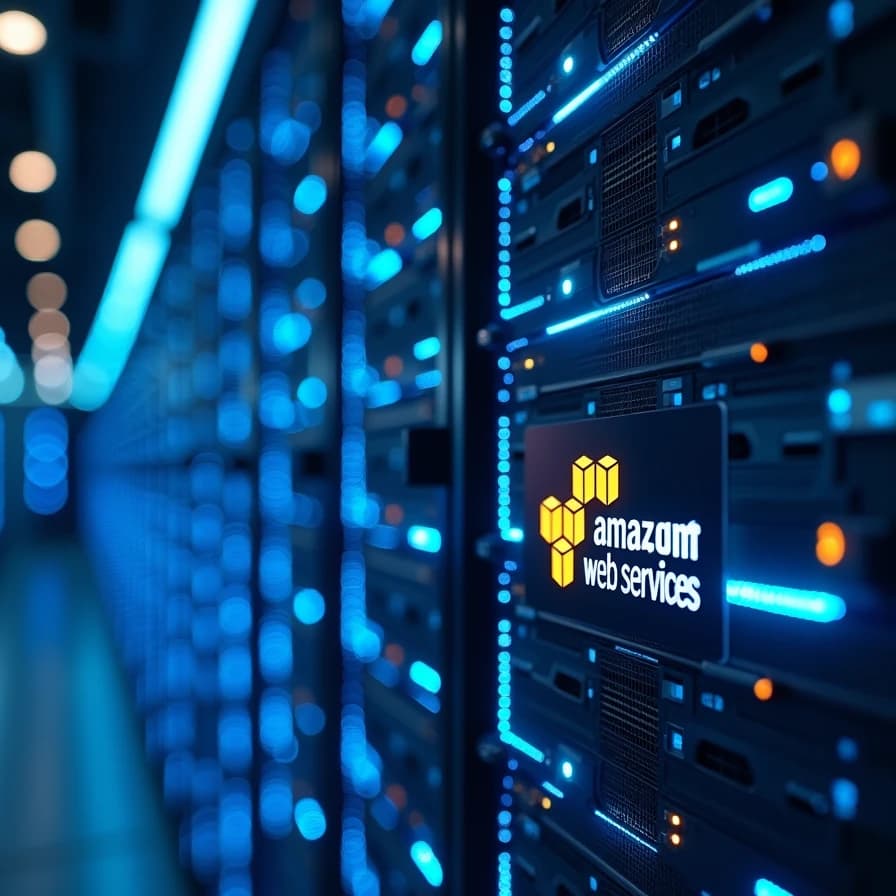
Amazon Web Services (AWS) has solidified its position as an unexpectedly robust engine of growth and profitability for the e-commerce giant. Recent results have exceeded forecasts, demonstrating sustained and increasing demand for its cloud computing services. This strength, however, does not exempt the company from the need for strategic and considerable investment to sustain its expansion.
The Backbone of Growth: AWS
AWS is not merely another division within the Amazon conglomerate; it is the technological backbone supporting countless businesses, from startups to global corporations. Its ability to offer scalable, secure, and on-demand infrastructure has redefined the business landscape, allowing organizations to innovate without the burden of managing their own physical infrastructure. AWS's performance, therefore, becomes a key barometer not only for Amazon but for the overall health of the technology sector and global digitalization.
Recent financial data underscores this reality: AWS is not only generating more revenue than expected, but its operating margin contributes disproportionately to Amazon's overall profitability. This scenario reinforces the thesis that the cloud is a long-term value driver, capable of mitigating the volatility of other business areas, such as retail.
The Paradox of Success: Rising Capital Expenditure
The success of AWS, however, carries a direct implication: a significant and continuous increase in capital expenditure. Expanding data center capacity, acquiring advanced hardware, and developing new geographical regions are imperative to meet growing demand and maintain a competitive edge. Amazon's CEO has been explicit in stating that the company will continue to invest heavily in this area in the short and medium term.
This investment cycle is not merely reactive; it is a proactive strategy to anticipate future market needs, especially in an environment where artificial intelligence and large-scale data processing are driving new computing demands. AWS's ability to offer cutting-edge solutions in these domains directly depends on its underlying infrastructure, which justifies the substantial investments.
Market Implications and Future Prospects
Amazon's decision to prioritize investment in AWS, even at the cost of higher capital expenditure, is an unequivocal sign of its commitment to cloud leadership. This approach suggests an expectation that the cloud computing market will continue to grow at an accelerated pace, driven by digital transformation and the adoption of emerging technologies. For investors, this implies that while margins might be temporarily squeezed by CapEx, the long-term growth potential and consolidation of AWS's market position remain intact. Amazon's ability to efficiently execute these investments and translate them into innovative services will be crucial to maintaining its upward trajectory in an increasingly competitive sector.
📖 Key Terms Glossary
❓ Frequently Asked Questions
Why is Amazon investing so heavily in AWS?
Amazon is investing significantly in AWS to meet the growing demand for its cloud services, expand its infrastructure capacity, and maintain its competitive advantage in a rapidly evolving market.
How does AWS's growth affect Amazon's overall strategy?
AWS's robust performance strengthens Amazon's financial position, enabling it to fund other initiatives while solidifying its role as a key technology provider for businesses globally.
What are the implications of this capital expenditure for the future of cloud computing?
The increase in capital expenditure by a leader like Amazon suggests a continuous expectation of growth in demand for cloud services, driving innovation and infrastructure expansion across the entire sector.
Support independent journalism 💸
The crypto ecosystem is volatile. If you decide to invest, do it safely using our affiliate links in the most trusted exchanges. You get a welcome bonus and we get a small commission.
Disclaimer: This content is not financial advice. Do your own research before investing.