Skip to content

AI News

Explore the latest news, analysis, and updates about AI.

AI

AQuA: A Bipartite Agentic Framework for Autonomous Quantitative Finance

Researchers from Princeton, Ant Group, and Stanford have introduced AQuA, a two-part agentic framework designed for autonomous factor discovery and model development in quantitative finance. The system addresses the problem of evidence corruption in quantitative research agents, where ineffective "leaky features" can be erroneously validated and propagated in future iterations, a flaw not mitigated by prompt-level instructions or reviewer agents.

Carlos "Emérito" López Lovera

AI

Minnesota Court Decision Restricts AI 'Nudification' Apps, Impacting xAI

A Minnesota court has denied xAI's request to block a state ban on applications that use artificial intelligence to 'nudify' images. This ruling allows Minnesota's legislation against these image manipulation tools to proceed, setting a precedent in the regulation of generative AI.

Carlos "Emérito" López Lovera
AI

Supabase Launches Evals: An Open-Source Benchmark for Evaluating AI Agents in Development Tasks

Supabase has released `supabase/evals`, an open-source framework and benchmark under the Apache-2.0 license. This system evaluates coding agents like Claude Code, Codex, and OpenCode on real Supabase tasks, such as schema construction, Edge Functions debugging, and RLS policy correction, within containerized environments, using a deterministic scoring system.

Carlos "Emérito" López Lovera

AI

The Dissonance of Enterprise AI: Trust, Evaluation, and Agent Deployment in Question

Enterprise AI implementation faces critical challenges regarding data context trust, the reliability of autonomous agent evaluation methods, and the precise definition of what constitutes an 'agent'. Organizations are building context infrastructure (RAG, native vendor solutions) faster than they can ensure its reliability. Concurrently, AI agents with increasing autonomy are deployed, despite half failing in production after passing internal evaluations. Agent orchestration centralizes on model provider platforms, but most implementations are limited to advanced chatbots, revealing a disconnect between ambition and operational reality.

Carlos "Emérito" López Lovera
AI

Aesthetic and Adoption Challenge for AI Glasses: The Impact of Public Perception

An influential public figure's statement on the aesthetics of AI-powered glasses highlights a persistent hurdle for the mass adoption of advanced wearable technology. This incident underscores the friction between technical functionality and social integration, a critical factor historically determining success or failure in the consumer device market.

Carlos "Emérito" López Lovera
AI

The Technical Legacy of Apple's Autonomous Car Project: The Genesis of Its High-Performance AI Chips

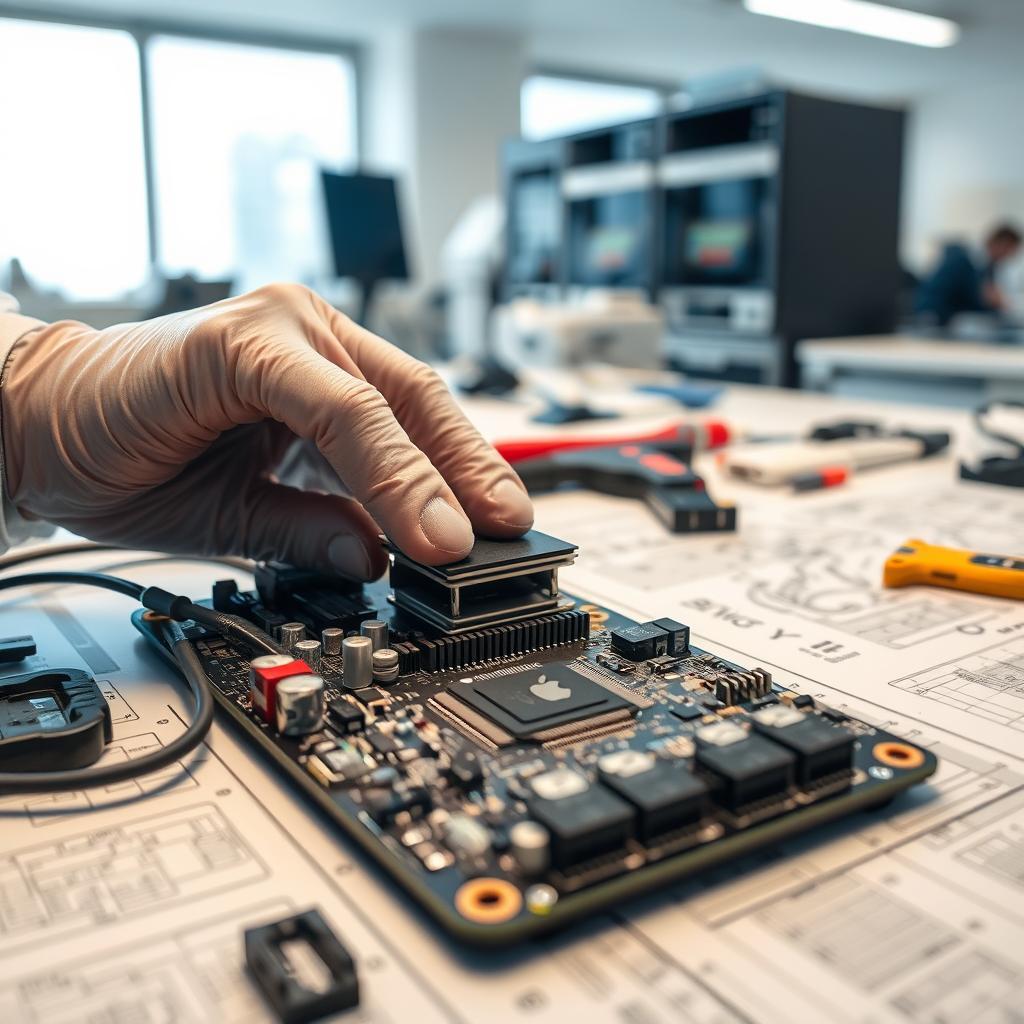
Apple's discontinued autonomous vehicle program, Project Titan, demanded unprecedented on-device artificial intelligence (AI) processing. This necessity spurred the internal development of highly efficient chip architectures, laying the groundwork for the AI capabilities in current Apple Silicon, providing a competitive edge in performance and privacy across its products.

Carlos "Emérito" López Lovera
AI

Apple Sues OpenAI Over Alleged Trade Secret Theft: Implications for AI Competition

Apple has filed a lawsuit against OpenAI, alleging the theft of trade secrets orchestrated by OpenAI's senior management, including a former Apple employee. This litigation highlights escalating tensions over intellectual property in the AI sector, impacting foundational model development and technical talent mobility.

Carlos "Emérito" López Lovera
AI

Netflix Optimizes Cassandra: Read Latency Reduced to Milliseconds Through Dynamic Partitioning

Netflix's AI team has implemented a dual-approach strategy to mitigate the wide partition problem in Apache Cassandra, specifically for its TimeSeries Abstraction. This methodology combines table-level time slice re-partitioning for future data with dynamic partitioning by time series ID for existing oversized partitions. These techniques have reduced read latency from seconds to milliseconds.

Carlos "Emérito" López Lovera